
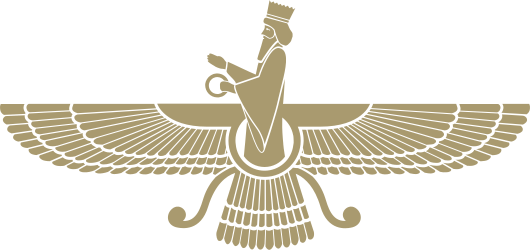
Zoroastrianism
One of the oldest religions still practised. It was the religion of the great Persian empires, and its ideas of good and evil, judgement after death and redemption probably influenced Judaism, Christianity and Islam.
📬 Want updates on Zoroastrianism? Subscribe to the newsletter
Overview
Zoroastrians believe in Ahura Mazda, the Wise Lord, and in a cosmic struggle between truth and order (asha) and falsehood and destruction (druj). Humans have free will and are asked to live by three principles:
- Good thoughts.
- Good words.
- Good deeds.
Fire serves as a symbol of purity and of God's presence, so Zoroastrian temples are called "fire temples". This does not mean they worship fire.
Origins and History
Zarathustra lived in eastern Iran, at a disputed date. He was a religious reformer who promoted belief in one supreme God. Zoroastrianism was the main religion of the Persian empires:
- The Achaemenid Empire. King Cyrus, who allowed the Babylonian exiles to return to Zion, is spoken of with great respect in the Hebrew Bible. Scholars disagree on how far the Achaemenid kings were Zoroastrian; the inscriptions of Darius I invoke Ahura Mazda.
- The Parthian Empire.
- The Sasanian Empire (224–651 CE). In this period it was the official state religion, with a powerful priesthood.
Development and Branches
The Arab conquest and decline: after the Muslim Arabs conquered Persia in the 7th century, Zoroastrianism gradually declined. Conversion to Islam came from taxes, social pressure and at times persecution.
Migration and diaspora:
- The Parsis: a group of Zoroastrians migrated to the west coast of India, where the Parsi community was founded. According to tradition (the "Qissa-i Sanjan") they were fleeing religious pressure. The date of arrival is disputed: the years 716, 765 and 936 have been proposed.
- Modern era: Parsis rose to prominent positions in the Indian economy. Examples are the Tata family and Freddie Mercury, who was born into a Parsi family.
How It Spread and Grew
🗺️ Maps of how the five largest religions spread →
At its height the religion spread with the Persian empires, from Anatolia to Central Asia. Since the Middle Ages it has been shrinking. The communities do not accept converts, tend to marry within the community and have low birth rates, so the number of believers keeps falling. A 2012 survey by FEZANA estimated about 112–122 thousand Zoroastrians worldwide, and India's 2011 census counted 57,264 Parsis and Zoroastrians.
Influence on the World
Theological influence: many scholars believe that ideas such as angels and demons, the Day of Judgement, resurrection of the dead, a saviour (Saoshyant) and the struggle between good and evil influenced Judaism in the Second Temple period, and through it Christianity and Islam. How great that influence was is still debated.
Nowruz: the Nowruz festival, the Persian New Year, is celebrated today by hundreds of millions.
What Draws Believers (Strengths)
- A simple, clear ethic: good thoughts, good words and good deeds.
- Free will and personal responsibility.
- Respect for nature, purity and the four elements.
- An ancient and proud heritage.
Criticism and Challenges
- Community survival: this is the main challenge. There is fierce internal debate over conversion and over the status of children of mixed marriages. Among conservative Parsis in India, the custom is to accept only the children of a Zoroastrian father. Many in the community, including the reformist movement, see this as discrimination against women.
- Historical criticism: criticism is directed at the Sasanian priesthood, which persecuted other religions.
Human Life, War and Peace – What It Teaches
- "Good thoughts, good words, good deeds". Protecting life and creation is part of the struggle between good and evil.
- The struggle against the forces of evil is seen as part of the cosmic order, but the religion does not encourage forcing belief on others.
- Respect for nature and the four elements.
- Compared with other religions: Sanctity of Life Across Religions
Religion, Power and Violence
The Sasanian period: in the Sasanian period Zoroastrianism was the state religion, and the priesthood at times persecuted religious minorities. In his inscriptions the high priest Kartir (3rd century) boasts of striking down Jews, Christians, Mandaeans, Manichaeans and Buddhists. Some historians doubt how far this persecution actually went, as Jewish and Christian sources from the period do not mention it.
The Achaemenid Empire: by contrast, the Achaemenid Empire was known for a policy of relative religious tolerance. The "Cyrus Cylinder" is often cited as an example.
When believers were victims: since the Middle Ages Zoroastrians themselves have been a minority suffering discrimination and persecution.
- In Qajar Iran, Zoroastrians paid the jizya, the poll tax on non-Muslims. It was abolished in 1882 after pressure from the Persian Zoroastrian Amelioration Fund, set up by Parsis in India.
- After the Islamic Revolution (1979) their numbers in Iran fell sharply and many emigrated. Zoroastrians are a recognised religious minority with one seat in parliament. The 2012 census counted about 25 thousand Zoroastrians in Iran.
Compare Zoroastrianism with…
⚖️ Religion, war and peace – across all religions · 🕰️ Timeline