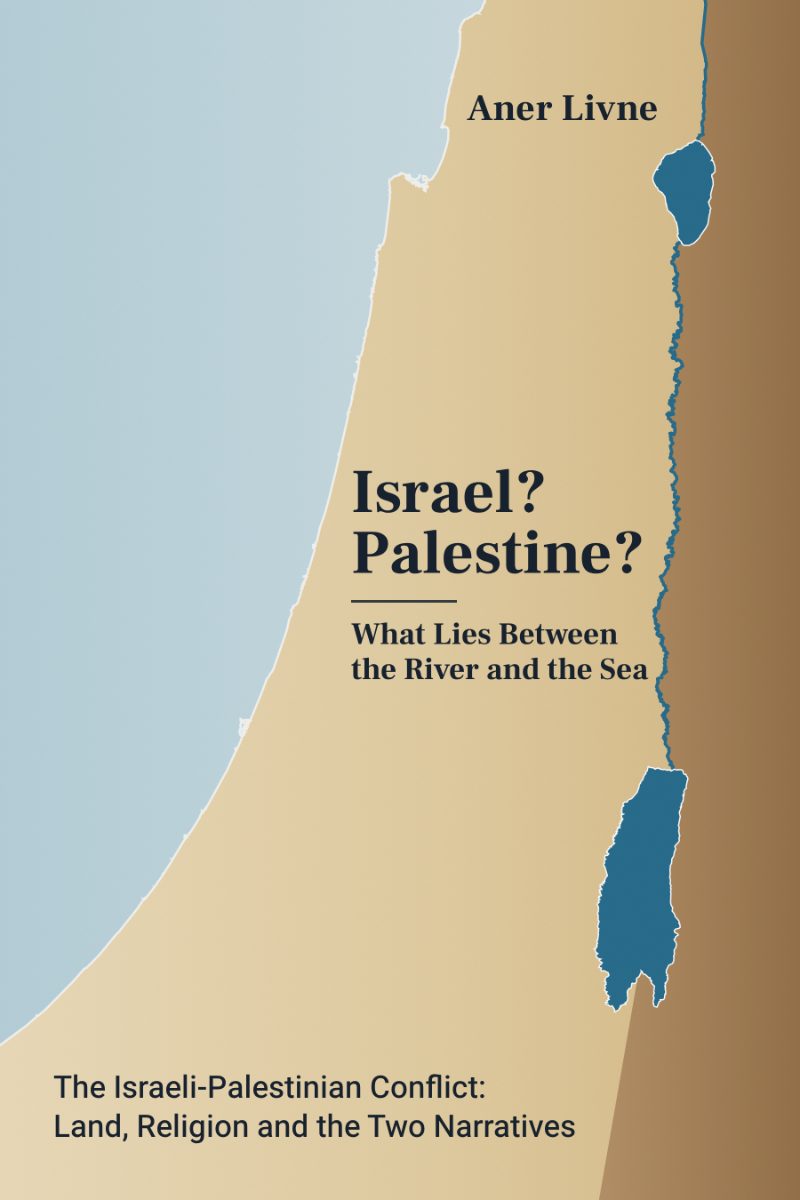
The Israeli-Palestinian Conflict and Religion
Is the Israeli-Palestinian conflict a religious conflict? A map of the Palestinian population groups – Arab citizens of Israel, East Jerusalem, the West Bank, Gaza and the refugees – the holy places, religion on both sides, Iran and Hezbollah, and the peace efforts. Both narratives, with sources.
📖 New book: Israel? Palestine? What Lies Between the River and the Sea – sign up for the pre-order →
In brief
At its core, the Israeli-Palestinian conflict is a national and territorial conflict: two national movements, Zionist and Palestinian, over the same land. But it is not a conflict without religion. At its center are places holy to three religions, and since the 1980s movements on both sides have framed it in religious terms. This page presents the religious dimension, the different groups in the Palestinian world and both narratives – without taking a side.
A national or a religious conflict?
- The core is national: the central questions are territory, borders, sovereignty, security, settlements and refugees. For most of the 20th century both sides were led by largely secular movements: the founders of political Zionism and, on the other side, the PLO and Fatah, whose leaders included Palestinian Christians.
- Religion as a thickening layer: holy places, above all the Temple Mount / Al-Aqsa, have been a flashpoint since the 1929 riots. Since the 1980s movements that see the conflict as a religious matter have grown: Hamas and Islamic Jihad on the Palestinian side, and currents within religious Zionism on the Israeli side.
- Why it matters: borders and sovereignty can be compromised on. When the question is framed as a commandment or as holiness, compromise is much harder. Scholars therefore disagree mainly about how much weight religion carries today – not about whether it is there.
The holy places
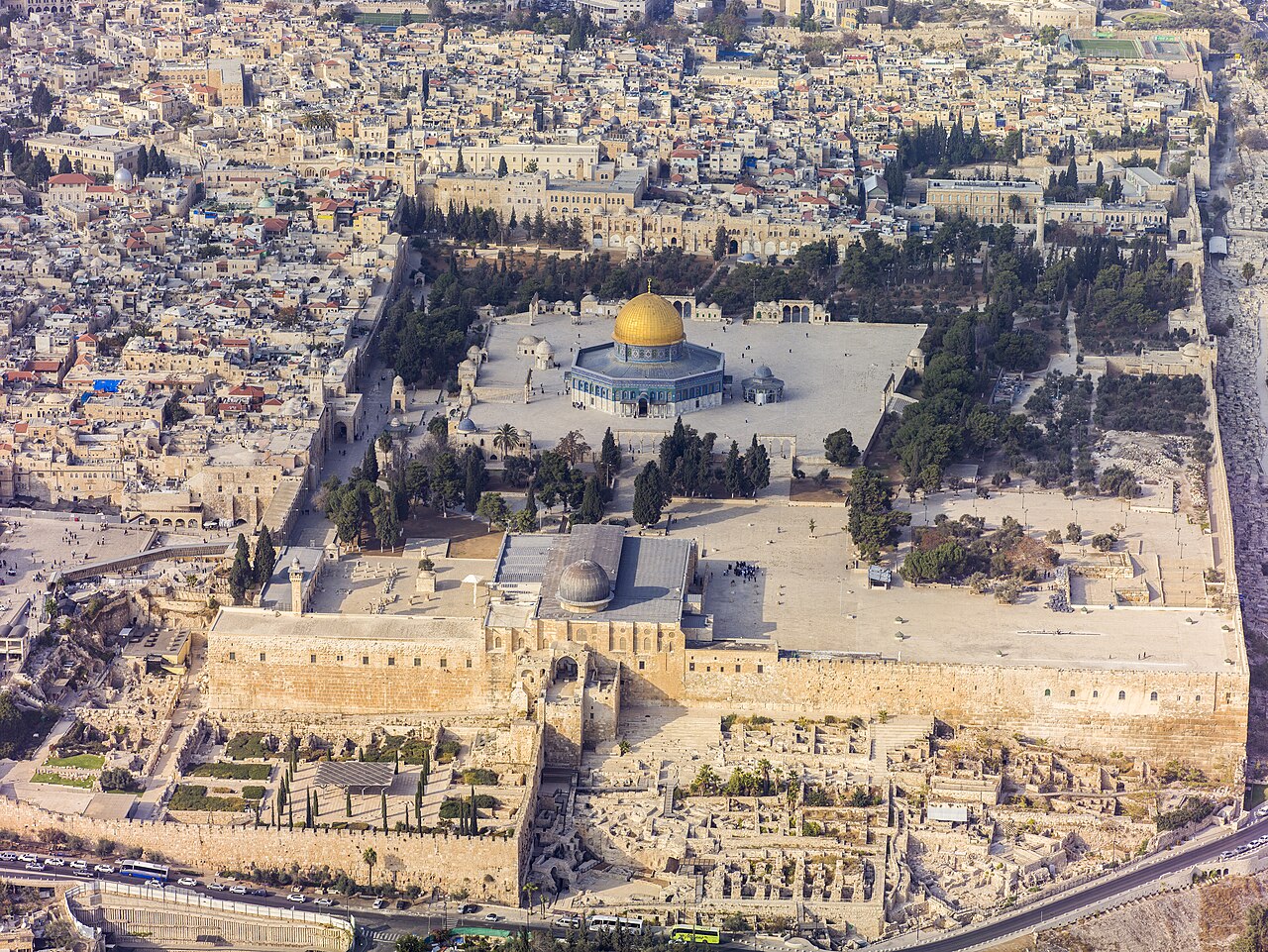
- The Temple Mount / Al-Haram al-Sharif: the holiest site in Judaism (the site of the Temple) and the third holiest in Islam (Al-Aqsa Mosque and the Dome of the Rock). Since 1967 a "status quo" has applied: the Jordanian Waqf administers the compound, and Jews may visit but not pray. In recent years there have been reports that the arrangement is eroding, one of the most explosive issues.
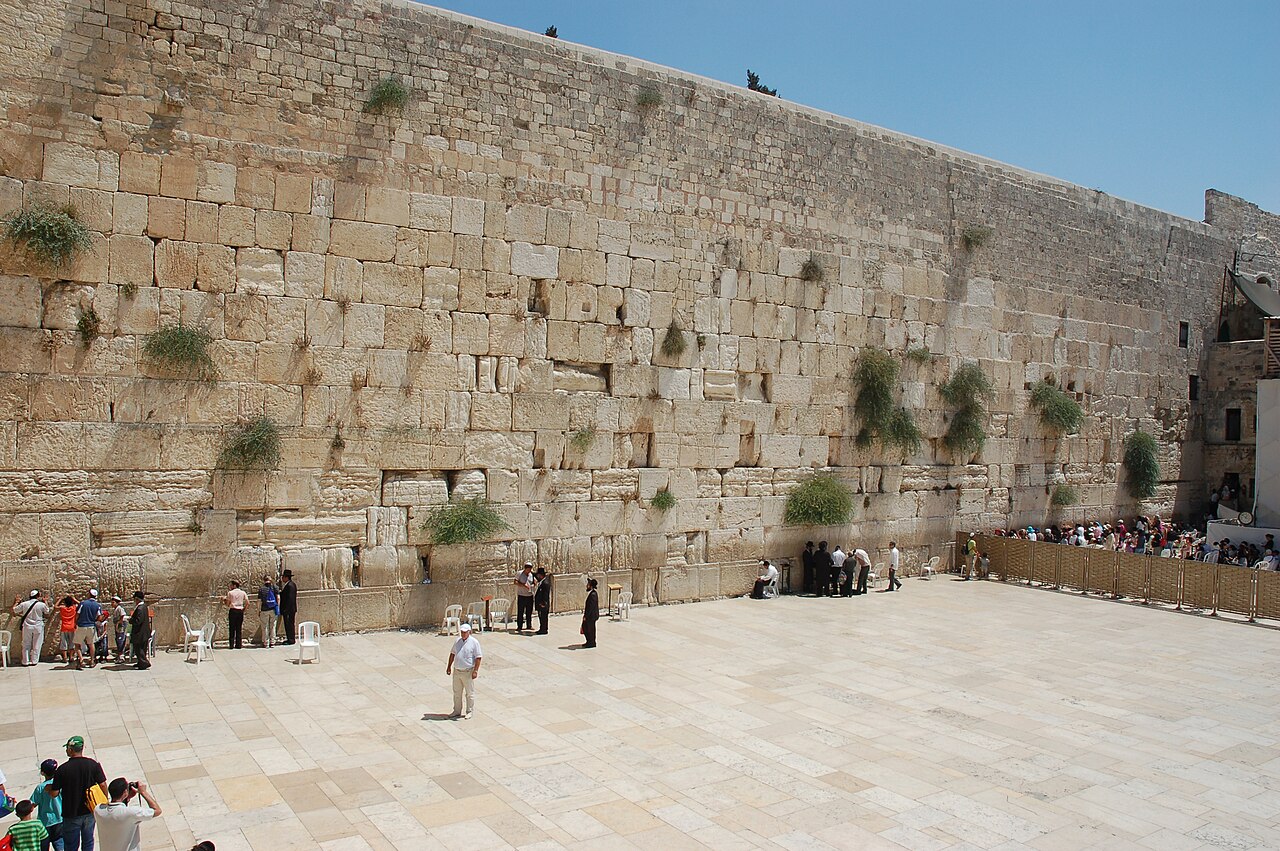
- The Western Wall: the holy place where Jews may pray. In Islam it is linked to the story of Muhammad's Night Journey (al-Buraq).
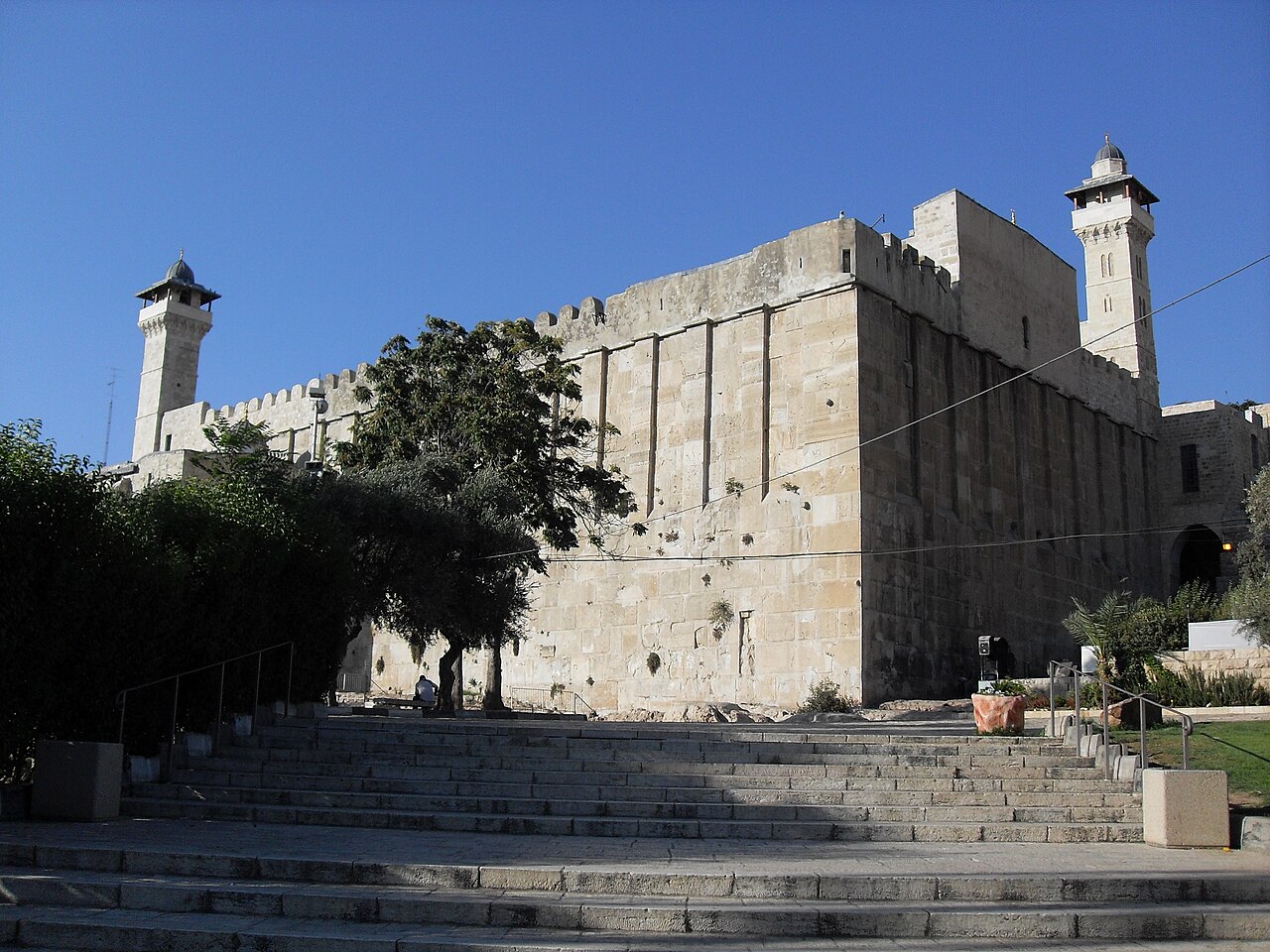
- The Cave of the Patriarchs / Al-Haram al-Ibrahimi in Hebron: holy to Judaism and Islam as the burial place of the patriarchs. In 1929, 67 Jews were massacred in Hebron; in 1994 Baruch Goldstein murdered 29 Muslim worshippers in the cave.
- Other sites: the Church of the Holy Sepulchre in Jerusalem (the holiest site for most of Christianity), Rachel's Tomb near Bethlehem and Joseph's Tomb in Nablus.
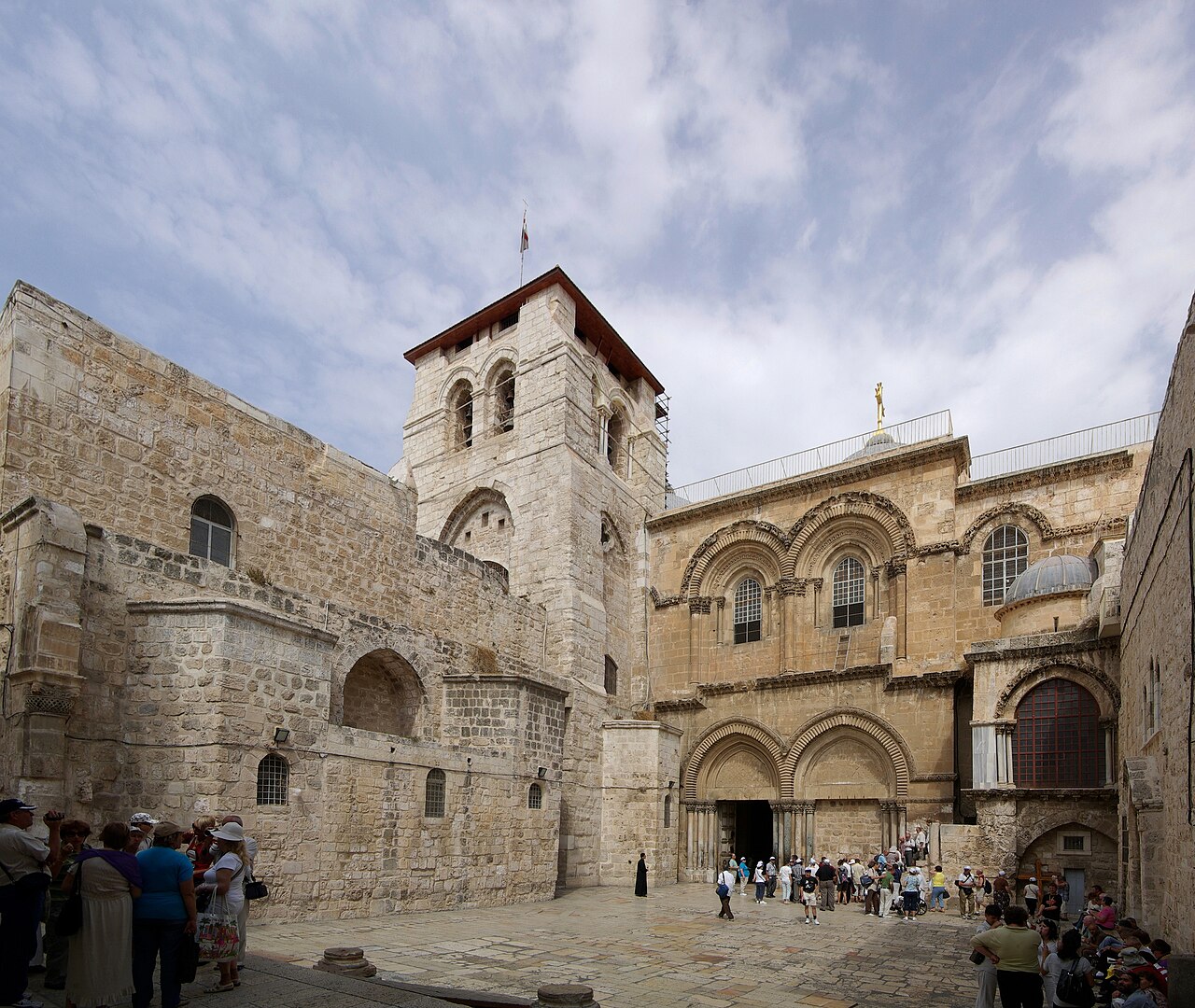
When the sacred ignites
- 1929 – the riots: began with a dispute over the Western Wall and spread to massacres in Hebron and Safed.
- 2000 – the Second Intifada: broke out after Ariel Sharon's visit to the Temple Mount; on the Palestinian side it was called the "Al-Aqsa Intifada".
- 2017 – the metal detector crisis: after an attack on the Temple Mount, metal detectors were placed at the entrances and removed after protests.
- 2021 – "Guardian of the Walls": an escalation that began with clashes at Al-Aqsa and in the Sheikh Jarrah neighborhood.
- 2023 – October 7: Hamas named the attack, in which about 1,200 people were killed in Israel and about 250 taken hostage, "Al-Aqsa Flood" – a deliberately religious framing.
Who ruled the land – and how the borders were drawn
Before the Ottomans
- The kingdoms of Israel and Judah (about 1000–586 BCE), followed by Babylon, Persia, the Hellenistic kingdoms, the Hasmoneans (2nd century to 63 BCE), Rome and Byzantium.
- The Muslim conquest (634–640): the first caliphate, then the Umayyads (who built the Dome of the Rock and al-Aqsa), the Abbasids, the Fatimids and the Seljuks.
- The Crusaders (1099–1187, and in Acre until 1291), then the Ayyubids (Saladin) and the Mamluks (1260–1516).
- Throughout these periods there was no local sovereignty in the land – neither Jewish nor Arab – from the end of the Hasmonean kingdom until 1948: it was part of large empires or, under the Crusaders, a kingdom whose nobles came from Europe.
The Ottoman period (1516–1917)
- There was no administrative unit called "Palestine". The land was divided into districts (sanjaks) – Jerusalem, Nablus, Acre and Gaza – under Damascus, and later also under Beirut and Sidon.
- From about 1872 Jerusalem and its surroundings became a separate district (the "Mutasarrifate of Jerusalem") reporting directly to Istanbul – until then the closest thing to a single unit within the land's borders.
- The population: in the late 19th century the large majority were Muslim Arabs, alongside a Christian minority and a small Jewish community that grew from the first Zionist immigration waves (from 1882).
The First World War – promises and partition
- The Hussein–McMahon correspondence (1915–1916): Britain promised Sharif Hussein of Mecca Arab independence in return for a revolt against the Ottomans. Whether the promise included Palestine is disputed to this day.
- The Sykes–Picot Agreement (1916): a secret agreement between Britain and France on dividing the Ottoman lands of the Middle East: Syria and Lebanon to France, Iraq and Transjordan to Britain, and an international status for Palestine.
- The Balfour Declaration (2 November 1917): Britain declared its support for "a national home for the Jewish people in Palestine", without prejudice to the civil and religious rights of the non-Jewish communities.
- The British conquest (1917–1918): Beersheba and Jerusalem in 1917, the north in 1918.
The mandates – who got what
- The San Remo conference (1920) allocated the mandates: to France – Syria and Lebanon; to Britain – Iraq and Palestine.
- The League of Nations approved the Mandate for Palestine in 1922, incorporating the Balfour Declaration – for the first time, a single political unit by that name.
- Transjordan (1921–1922): Britain separated the area east of the Jordan – about three quarters of the mandate territory – and set up the Emirate of Transjordan under Abdullah, son of Sharif Hussein. The Jewish national home clauses did not apply there. In 1946 it became the Kingdom of Jordan.
- The northern border (1923): an agreement between Britain and France set the border between the British and French mandates; the Golan Heights stayed on the Syrian side.
The British Mandate (1920–1948)
- Jewish immigration and settlement alongside Arab opposition: the riots of 1920, 1921 and 1929, and the Great Arab Revolt (1936–1939).
- The Peel Commission (1937) first proposed partition. The White Paper (1939) restricted Jewish immigration.
- The UN Partition Plan (29 November 1947): a Jewish state, an Arab state, and Jerusalem under international rule. The Jewish leadership accepted; the Arab leadership in Palestine and the Arab states rejected it.
- 1948–1949: Israel declared independence on 14 May 1948, and Arab states invaded. About 700,000 Arabs fled or were expelled during the war (see "The refugees" below). After the armistice agreements, the West Bank was annexed by Jordan (1950), and the Gaza Strip came under Egyptian administration – until 1967.
The link to the definition of "Palestinian"
- The Palestinian National Charter (1968) states that "Palestine, with the boundaries it had during the British Mandate, is an indivisible territorial unit" (Article 2), and that a Palestinian is an Arab who normally resided there until 1947 (Article 5).
- In other words, the borders that define "Palestine" are those Britain and France drew in 1920–1923 – not an earlier administrative unit.
- The Palestinian view: the people and their tie to the land came before the borders; the borders only gave an official name to a land where generations had lived.
- The critical view: "Palestine" as a political unit was created by the colonial powers, and before that the land's Arabs saw it mainly as part of "Southern Syria" or of the wider Arab world.
- And on the Jewish side: Israel's borders were also set through this process – the Mandate, the partition plan and the armistice lines – not by biblical borders.
Who are the Palestinians? The name and the identity
Where the name comes from
- The Philistines: the name derives from the Philistines, a sea people who settled the southern coastal plain around the 12th century BCE ("Peleset" in Egyptian sources, "Peleshet" in the Bible). The Philistines disappeared as an independent people in antiquity, and today's Palestinians are not their direct descendants.
- Greece and Rome: the Greek historian Herodotus (5th century BCE) used the name "Palaistinē" for the coastal region and the land around it. After the Bar Kokhba revolt (132–136 CE), Emperor Hadrian renamed the province of Judaea "Syria Palaestina". Most historians see this as a step meant to blur the Jewish connection to the land; others hold that the name was already in use and the change was mainly administrative.
- Muslim rule: in Arabic, "Filastin"; under the caliphate there was a district called "Jund Filastin".
- The British Mandate (1920–1948): "Palestine (E.I.)" was an official name, and "Palestinian" meant any resident of the country – Jews included. The Jewish newspaper "The Palestine Post" (today "The Jerusalem Post") and the Palestine Orchestra (today the Israel Philharmonic) carried the name. After 1948 the Jews became "Israelis", and the name "Palestinians" remained with the country's Arabs.
Where they come from
- Mixed origins: Palestinians descend from the population that lived in the land over the generations – including local inhabitants since antiquity and Jews and Christians of the Byzantine period who converted to Islam and adopted Arabic – alongside Arab tribes and migrants since the Muslim conquest in the 7th century, and migrants from across the Ottoman world, for example from Egypt in the 19th century. The weight of each component is a matter of historical and political debate.
- Genetic studies: have found kinship between Jews, Palestinians and other Levantine peoples, pointing to a shared ancient origin.
When a Palestinian national identity formed
- The Palestinian view: the identity rests on a continuous connection to the land over generations. Historian Rashid Khalidi (Palestinian Identity, 1997) describes an identity that took shape in the late Ottoman period and the early 20th century, alongside other identities – local, religious, Arab and Ottoman.
- The critical view, common in Israel: until the 20th century the identity of the country's Arabs was mainly local, tribal, religious or broadly Arab – at the first Palestinian Arab Congress (1919) some called for the land to be seen as part of "Southern Syria". In this view, a separate national identity formed mainly in the 20th century, largely in opposition to Zionism, and strengthened after 1948 and 1967.
- What is agreed: like most modern national identities, the Palestinian identity formed in the modern era, and today it is the real national identity of millions of people.
The official definition
- The Palestinian National Charter (1968), Article 5: "The Palestinians are those Arab nationals who, until 1947, normally resided in Palestine", whether they were evicted or stayed, and anyone born after that to a Palestinian father – inside the country or outside it.
- Article 6: Jews who normally resided in the country "until the beginning of the Zionist invasion" will be considered Palestinians. Israeli commentators read this as 1917, the year of the Balfour Declaration.
Palestinians today
- Numbers: according to the Palestinian Central Bureau of Statistics, about 15.5 million Palestinians worldwide at the end of 2025: about 7.4 million between the river and the sea and about 8.1 million in the diaspora – mainly in Jordan, then in other Arab countries, Chile and the United States.
- Religion: the vast majority are Sunni Muslims. There is a Christian minority (small in the West Bank and Gaza, larger among Arab citizens of Israel and in the diaspora) and a small Samaritan community. Most Druze in Israel do not define themselves as Palestinians.
The Palestinian groups today
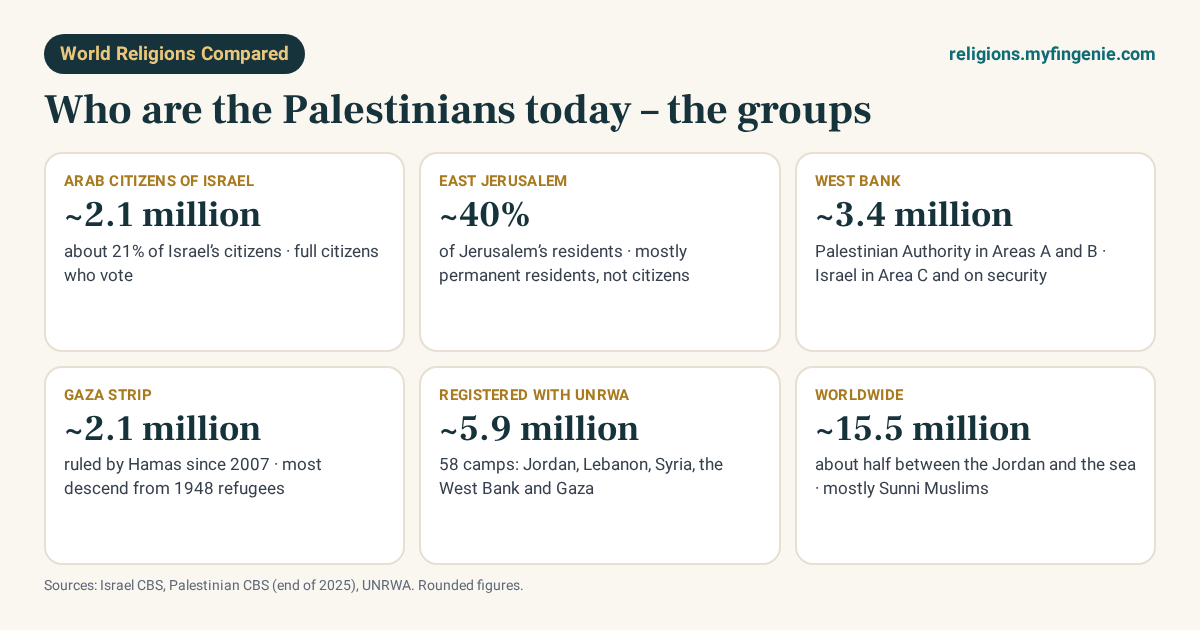
"The Palestinians" are not one bloc. They live under different authorities, with different legal status and different views.
Arab citizens of Israel
- Size: about 21% of Israel's citizens, about 2.1 million. According to Israel's Central Bureau of Statistics, the Muslim population in Israel numbered about 1.85 million at the end of 2025. They also include Christians and Bedouin. The Druze are usually counted separately, and most do not define themselves as Palestinians.
- Status: full citizens – they vote for the Knesset, and today there is also political partnership (for example Ra'am in the 2021 coalition).
- Identity: varied. In an Israel Democracy Institute survey (2017), 39% defined their identity first as "Arab", 34% as "religious" and 14% as "Palestinian". Others define themselves as "Palestinian citizens of Israel".
- Positions: most prefer integration into the state and Israeli politics – from the Islamist party Ra'am, which joined the coalition, to national parties such as Hadash-Ta'al and Balad. After October 7 the share who feel "part of the State of Israel and its problems" rose to 70% (Israel Democracy Institute, November 2023), from 48% in June that year, and most said Hamas's actions do not represent their values. Many support a Palestinian state alongside Israel; in a 2023 joint poll 44% of them also supported the idea of one equal state.
East Jerusalem
- Size: about 40% of Jerusalem's residents.
- Status: most are permanent residents rather than citizens – a unique status created after 1967. They may apply for citizenship, and a small share do; according to one study, about 12,000 applications have been filed since 1970 and about 5,000 approved. Residency can be revoked if the "center of life" moves outside the city.
- Positions: they have shifted over the years, between Palestinian identity and keeping the benefits of Israeli residency (national insurance, health care, freedom of movement). In Washington Institute polls, the share preferring Israeli over Palestinian citizenship rose from 35% (2010) to 52% (2015), fell to about 15% (2020) and returned to about half (2022).
The West Bank (Judea and Samaria)
- Size: about 3.4 million Palestinians (Palestinian Central Bureau of Statistics, end of 2025), alongside about half a million Israelis in settlements.
- Rule: under the Oslo Accords: Area A (about 18%) under Palestinian control, Area B (about 22%) under Palestinian civil and Israeli security control, and Area C (about 60%) under Israeli control. The Palestinian Authority is led by Fatah.
- Positions: very low trust in the leadership – 80% want Mahmoud Abbas to resign, and Hamas leads Fatah in support, though the most popular figure is Fatah's Marwan Barghouti, imprisoned in Israel. Support for two states in the West Bank is low (33%), many see "armed struggle" as the most effective path, and 78% oppose disarming Hamas even as a condition for ending the war (PCPSR, October 2025).
The Gaza Strip
- Size: about 2.1 million (end of 2025). Most residents are descendants of 1948 refugees.
- Rule: Hamas has ruled the Strip since June 2007. After the 2023–2025 war a ceasefire took effect in October 2025; in July 2026 an agreement on Hamas's disarmament was announced, mediated by the "Board of Peace", but as of November 2026 Hamas had not disarmed and the IDF held a large part of the Strip.
- Positions: after two years of war – 72% of Gazans reported that a family member had been killed or injured – the picture is mixed: support for two states is higher than in the West Bank (61%), and 44% support disarming Hamas (compared with 18% in the West Bank). Even so, Hamas remains the most popular party in the Strip (41%, compared with 29% for Fatah) (PCPSR, October 2025).
What do the polls say?
- The assumption that "Gaza = Hamas, the West Bank = moderates" is simplistic: as the positions above show, support for two states and for disarming Hamas is higher in Gaza, while support for Hamas and for armed struggle is higher in the West Bank.
- Polls in wartime are very volatile, so it is worth looking at trends over time.
The refugees: why are they still refugees?
The numbers
- 1948: according to a UN estimate, about 711,000 Palestinian Arabs left or were expelled from the territory under Israeli control (other estimates range from about 540,000 to 850,000).
- Today: about 5.9 million are registered as refugees with UNRWA (the UN agency for Palestine refugees), in 58 recognized camps: in Jordan, Lebanon, Syria, the West Bank and Gaza. There are almost no camps in Egypt.
The situation differs greatly between countries
- Jordan: about 2.4 million registered and 10 camps. Jordan granted citizenship to most Palestinians as early as 1949 and in its 1954 nationality law. The exception: refugees from Gaza, who did not receive citizenship.
- Lebanon: about 490,000 registered, but according to UNRWA only about 250,000 actually live in Lebanon, in 12 camps. No citizenship, restrictions on working in many professions, and a 2001 law that in practice prevents them from buying real estate.
- Syria: under Law 260 of 1956, rights nearly equal to citizens in work and residence – without citizenship and without the right to vote. The civil war badly damaged the camps, such as Yarmouk.
- The West Bank and Gaza: 19 camps in the West Bank and 8 in Gaza, under the Palestinian Authority and Hamas respectively.
Why were they not absorbed? Two positions
- The Palestinian and Arab states' position: the refugees keep their status until the "right of return" is realized, based on UN General Assembly Resolution 194 (1948). The Arab League's Casablanca Protocol (1965) gave Palestinians rights to work and residence "whilst retaining their Palestinian nationality"; Lebanon and Saudi Arabia expressed reservations, and many states did not implement it.
- The Israeli position: under UNRWA's definition refugee status is inherited, so the number of refugees grows from generation to generation instead of shrinking; a mass return would end the Jewish state. Israel also points to the roughly 650,000 to 850,000 Jews who left or were expelled from Arab countries and were absorbed in Israel. In 2024 the Knesset passed laws banning UNRWA's activity in Israeli sovereign territory.
- What the refugees themselves say: in the only large survey on the subject (PCPSR, 2003; 4,506 refugees in the West Bank, Gaza, Jordan and Lebanon), 95% demanded that the right of return be recognized as a principle, but only about 10% said they would choose to exercise it inside Israel; many in Jordan preferred to stay there. The survey caused an uproar – protesters stormed the institute's office in Ramallah – and its question wording was also criticized.
- The response of UNRWA's supporters: in other protracted refugee situations descendants are also recognized as refugees, and the problem is the absence of a political settlement, not the definition.
Religion on the Israeli side
- Religious Zionism: inspired by Rabbi Abraham Isaac Kook and his son Rabbi Zvi Yehuda Kook, it sees settlement of the Land of Israel as part of a process of redemption. "Gush Emunim" (1974) led settlement in the West Bank. Within religious Zionism there are also moderate and conciliatory voices.
- The Haredim (ultra-Orthodox): mostly non-Zionist ideologically, with varied positions on the conflict. A small group such as Neturei Karta opposes the very existence of the state.
- Secular Israelis: most see the conflict as a national and security matter.
- Jewish religious extremism: the "Jewish Underground" of the 1980s, which planned to blow up the Dome of the Rock; the massacre at the Cave of the Patriarchs (1994); and the assassination of Prime Minister Yitzhak Rabin (1995) by an assassin who opposed the Oslo Accords out of a religious worldview.
- Today: the "hilltop youth" and "price tag" attacks – young people from the outposts who attack Palestinians and their property. In 2015 three members of the Dawabsheh family, including a baby, were killed in the village of Duma when their home was set on fire. Attacks peaked in 2023–2025.
Religion on the Palestinian side
- The PLO and Fatah: secular national movements, in which Christians were also active, such as George Habash, founder of the Popular Front.
- Hamas: founded in 1987 as an offshoot of the Muslim Brotherhood. Its 1988 charter (Article 11) defined all of Mandatory Palestine as a "waqf" – an Islamic endowment of which no part may be given up. The 2017 document of principles softened the wording and accepted a state on the 1967 lines "as a formula of national consensus", without recognizing Israel.
- Islamic Jihad: a smaller Sunni organization, very close to Iran.
- Palestinian Christians: a small and shrinking minority, mainly in Bethlehem, Jerusalem, Ramallah and the Galilee.
The claim of a different attitude to life – what the facts say
A common claim in Israel is that the conflict also stems from a different attitude to human life and to death. It is usually quoted in a line attributed to Golda Meir – "Peace will come when the Arabs will love their children more than they hate us" – for which no primary source has been found. Many Palestinians reject it outright. The facts in both directions:
What supporters of the claim point to
- Redeeming captives in Israel: in 2011 Israel released 1,027 prisoners in exchange for the soldier Gilad Shalit. The decision explicitly drew also on the commandment of pidyon shvuyim (redeeming captives), which Judaism calls "a great commandment".
- Glorifying shahada in the Islamist movements: Hamas and Palestinian Islamic Jihad present death in the struggle as shahada (martyrdom) and glorify suicide bombers.
- Payments to families: for years the Palestinian Authority paid stipends to prisoners and to the families of those killed in attacks or in the conflict. In response, the US passed the Taylor Force Act in 2018, cutting aid. In February 2025 the PA announced it would move the payments to a welfare system; Israel and the US said the change was cosmetic.
- Tunnels and shelters in Gaza: in October 2023 senior Hamas official Mousa Abu Marzouk said the tunnels were built to protect the fighters, and that protecting civilians is the responsibility of the UN and Israel.
What those who dispute it point to
- The religious sources are similar: Islam teaches that "whoever saves a soul, it is as if he had saved all mankind" – a verse that comes from Judaism: the Quran presents it as a commandment to the "Children of Israel", and it matches the Mishnah. Islam also forbids suicide and harming civilians. Most Islamic scholars forbid suicide attacks, but some prominent ones, such as Yusuf al-Qaradawi, permitted them against Israelis.
- A national-strategic explanation: research, including Robert Pape's ("Dying to Win", 2005), found that suicide attacks are driven mainly by national goals against foreign control, not by religion. The group with the most suicide attacks until the mid-2000s was the Tamil Tigers in Sri Lanka – a secular organisation – and the al-Aqsa Martyrs' Brigades of secular Fatah also carried out such attacks.
- The Palestinian narrative: many Palestinians see the line attributed to Golda Meir as a generalisation that blames parents for their children's deaths, and explain the violence by occupation, loss and despair – not by a different attitude to life. They point to the large number of Palestinian dead as evidence that Israel values their lives less.
- On the Israeli side too there are extremist currents that justify violence on religious grounds, such as Baruch Goldstein (1994).
What can be said with confidence
The Jewish and Islamic sources on the value of life are very close. The Islamist movements glorify death in the struggle, and most researchers explain suicide attacks first by national and strategic goals. How much of all this stems from religion, from who leads the struggle and from the circumstances is disputed. See also Sanctity of Life Across Religions.
Regional actors: Sunnis, Shia and Iran
- Hezbollah is not Palestinian: it is a Lebanese Shia organization founded in 1982 and backed by Iran. It has fought Israel also in the name of the Palestinian cause, but it is a Lebanese and regional actor.
- A Sunni-Shia paradox: most Palestinians are Sunni, and Hamas is a Sunni organization – yet it is backed by Shia Iran, as part of the "axis of resistance" that also includes Hezbollah and the Houthis in Yemen. It is an example of political interest outweighing the sectarian divide.
- The Sunni Arab states: Egypt (1979) and Jordan (1994) signed peace treaties. The treaty with Jordan recognized its special role at the Muslim holy sites in Jerusalem. In 2020 the "Abraham Accords" were signed with the United Arab Emirates, Bahrain and Morocco. Normalization with Saudi Arabia, custodian of the holy cities of Mecca and Medina, stalled after October 7.
The peace efforts – and why Jerusalem is the rock
- Oslo (1993–1995): mutual recognition, the establishment of the Palestinian Authority and the division of the West Bank into Areas A, B and C. The questions of Jerusalem and the refugees were deferred to the permanent settlement.
- Camp David (2000): the talks collapsed partly over sovereignty on the Temple Mount. Accounts of what was offered are disputed, and no final written offer was signed.
- The Clinton Parameters (December 2000): "what is Arab to the Palestinians and what is Jewish to Israel" in Jerusalem, and divided sovereignty on the Temple Mount.
- Annapolis and Olmert (2008): a proposal to place the "Holy Basin" under international trusteeship.
- Religious peace initiatives: religious leaders on both sides have tried to bridge the divide, such as Rabbi Menachem Froman, a rabbi in the settlement of Tekoa who met Palestinian leaders to promote peace on a religious basis.
The two narratives in brief
- 1948: for Israelis – the War of Independence, a defensive war after the rejection of the partition plan and the invasion by Arab states. For Palestinians – the Nakba ("the catastrophe"): expulsion, uprooting and the loss of the homeland.
- The territories: for many in Israel – the cradle of Jewish history (Judea and Samaria) and strategic depth. For the Palestinians and most of the international community – occupied territory on which a Palestinian state should be established.
- Jerusalem: for Israel – its united capital. For the Palestinians – the east of the city should be the capital of their state.
- Refugees: see the refugees section above.
Slogans about the whole land
- "From the river to the sea": a Palestinian slogan ("min al-nahr ila al-bahr") referring to the whole area between the Jordan River and the Mediterranean Sea. The PLO used the phrase as early as the late 1960s, in the sense of one state over the whole land. Hamas's 2017 document of principles calls for the liberation of Palestine "from the river to the sea".
- How it is understood: for many Israelis and Jews, and for various governments and legislatures, it is a call to eliminate the State of Israel. Some who use it, mainly at demonstrations in the West, say it means freedom and equality for all the land's inhabitants.
- Responses: the US House of Representatives condemned it as antisemitic in April 2024 (377 to 44). In Germany the interior ministry banned Hamas activity in November 2023 and treated the slogan as a symbol of the organization; German courts are divided on whether using it is an offence.
- On the Israeli side too: the Likud's 1977 platform stated that "between the Sea and the Jordan there will only be Israeli sovereignty", and currents within religious Zionism see the whole Land of Israel as a religious destiny.
What exists between the river and the sea today
- Population: according to Israel's Central Bureau of Statistics, at the end of 2025 about 10.2 million people lived in Israel: about 7.8 million "Jews and others" (76%) and about 2.1 million Arabs (21%, including East Jerusalem). According to the Palestinian Central Bureau of Statistics, about 7.4 million Palestinians live in "historic Palestine" – citizens of Israel, East Jerusalem, the West Bank and Gaza. In other words, similar numbers of Jews and of Palestinian Arabs live between the river and the sea. The Palestinian figures are disputed (for example, double counting of Jerusalem residents), so "numerical parity" is an estimate, not a precise fact.
- Rule and status: Israel is sovereign in its territory, including East Jerusalem; its citizens, Jews and Arabs, vote for the Knesset. East Jerusalem residents vote in municipal elections but not for the Knesset. In the West Bank – the Palestinian Authority in Areas A and B, and Israel in Area C and on security; Palestinians in the West Bank are not Israeli citizens, and the settlers are subject to Israeli law. In Gaza – Hamas, and under the ceasefire agreement also an Israeli military presence in parts of the Strip.
What do those who chant it mean?
There is no single intention. The main positions:
- Hamas and Islamic Jihad: the "liberation" of the whole land without recognizing Israel. In its 2017 document, Hamas accepts a state on the 1967 lines only "as a formula of national consensus", without giving up the rest.
- The historical PLO: in the 1960s and 1970s – one "secular and democratic" state instead of Israel. In 1993 the PLO recognized Israel, and the Palestinian Authority's official position is two states on the 1967 lines.
- Supporters of one equal state: one state for all the land's inhabitants with equal rights. In a joint Tel Aviv University and PCPSR poll (January 2023), 23% of Palestinians, 20% of Jewish Israelis and 44% of Arab citizens of Israel supported the idea.
- Demonstrators in the West: for many the meaning is more general – "freedom for Palestinians". In a small online survey of 250 US students commissioned by researcher Ron Hassner (2023), only 47% of the slogan's supporters could name the river and the sea.
The implications
- For Palestinians: it depends on what is meant. One equal state means citizenship, full rights and an end to military rule – but it requires Israeli consent, and most Jewish Israelis oppose it. Hamas's vision means continued armed conflict, whose price in Gaza has been very heavy. The debate over the slogan also affects Palestinians and their supporters abroad, who in some countries face prosecution for using it.
- For Israel: any version in which one state replaces Israel – with similar numbers of Jews and Palestinians between the river and the sea, and certainly with a return of refugees – means the end of Jewish self-determination in a state of their own. After October 7, most Israelis hear the slogan as a real security threat.
- For Jews worldwide: Jewish organizations report a sharp rise in antisemitic incidents since October 2023, and many of them see the slogan, when chanted at demonstrations, as a call to eliminate Israel.
- The Israeli version of "the whole land" also raises a question: annexing the whole territory without full rights for Palestinians undermines the state's democratic character; with full rights – the Jewish majority is at risk. This is the "demographic dilemma", the main argument of two-state supporters in Israel.
- The religious link: when the claim to the whole land rests on holiness – an Islamic "waqf" on one side, the whole Land of Israel as a commandment on the other – it is especially hard to compromise.
Recognizing that both narratives exist and matter to the peoples who hold them does not require accepting them.
Frequently asked questions
Is the Israeli-Palestinian conflict a religious conflict?
At its core it is a national and territorial conflict between two national movements over the same land. But it has a strong religious dimension: holy places such as the Temple Mount and Al-Aqsa, and religious movements on both sides – such as Hamas on the Palestinian side and currents within religious Zionism on the Israeli side – that see it as a matter of holiness, which makes compromise harder.
Who are the Palestinians?
The Arabs who lived in the land until 1948 and their descendants – about 15.5 million worldwide according to the Palestinian Central Bureau of Statistics, about half of them between the Jordan and the sea. They live in different groups: citizens of Israel, residents of East Jerusalem, the West Bank, the Gaza Strip and refugees in Jordan, Lebanon and Syria. The vast majority are Sunni Muslims, with a Christian minority.
Where does the name "Palestine" come from?
From the Philistines, a sea people on the southern coast in antiquity. Herodotus used the name in the 5th century BCE, and Emperor Hadrian renamed the province of Judaea "Syria Palaestina" after the Bar Kokhba revolt. Under the British Mandate "Palestinian" meant any resident of the country, Jews included.
What does "from the river to the sea" mean?
It refers to the whole area between the Jordan River and the Mediterranean Sea. Many Israelis and Jews, and various governments and legislatures, see it as a call to eliminate the State of Israel; some who use it in the West say it means freedom and equality. There is also an Israeli claim to the whole area, for example in the Likud's 1977 platform.
Why are there still Palestinian refugee camps?
About 5.9 million are registered as refugees with UNRWA, in 58 camps in Jordan, Lebanon, Syria, the West Bank and Gaza. The Palestinian and Arab states' position: the status is kept until the "right of return" is realized. The Israeli position: the status is inherited and perpetuates the problem. The situation differs between countries – in Jordan most are citizens; in Lebanon there is no citizenship and there are restrictions on work and property.
What is the difference between Arab citizens of Israel and Palestinians in the West Bank and Gaza?
Arab citizens of Israel, about 21% of citizens, are full citizens who vote for the Knesset. East Jerusalem residents are mostly permanent residents, not citizens. Palestinians in the West Bank live under the Palestinian Authority and Israeli control according to the Oslo areas, and Hamas has ruled Gaza since 2007.
Why is the Temple Mount so sensitive?
It is the holiest site in Judaism and the third holiest in Islam. Since 1967 a "status quo" has applied: the Jordanian Waqf administers the compound, and Jews may visit but not pray. Events around it have sparked waves of violence, from the 1929 riots to the Second Intifada and "Al-Aqsa Flood" in 2023.
Is Hezbollah a Palestinian organization?
No. Hezbollah is a Lebanese Shia organization founded in 1982 and backed by Iran. Most Palestinians are Sunni, and Hamas is a Sunni organization – but it too is backed by Iran, as part of the "axis of resistance".
Sources
- Encyclopaedia Britannica: Palestine – History; Ottoman Empire; Sykes-Picot Agreement; Balfour Declaration; Mandate for Palestine.
- The Palestine Mandate, League of Nations (1922) – פרויקט אבלון, אוניברסיטת ייל.
- The Palestinian National Charter (1968) – פרויקט אבלון, אוניברסיטת ייל.
- UN General Assembly Resolution 181 (1947) – פרויקט אבלון, אוניברסיטת ייל.
- Israel Central Bureau of Statistics
- Israel Democracy Institute – Arab society in Israel
- Palestinian Central Bureau of Statistics – Palestinians at the end of 2025
- PCPSR – Public Opinion Poll No. 96 (October 2025)
- UNRWA – Wikipedia
- EUAA – Palestinians in Lebanon
- Casablanca Protocol (1965) – UN
- Law No. 260 of 1956 – Syria
- Jordan and the Palestinians – OpenEdition
- West Bank areas in the Oslo II Accord – Wikipedia
- 2017 Hamas charter – Wikipedia
- 2000 Camp David Summit – Wikipedia
- CFR – Middle East peace plans
- Al Jazeera – Board of Peace disarmament agreement (July 2026)
- From the river to the sea – Wikipedia
- House of Representatives, roll call 134 (April 16, 2024) – H.Res. 883
- Legal Tribune Online – the slogan in German courts
- Likud party platform 1977 – Jewish Virtual Library
- CBS end-2025 figures (JDN)
- PCBS – Nakba 2026 report (Palestinians worldwide, end of 2025)
- Tel Aviv University and PCPSR – joint poll, January 2023
- Ron Hassner – From Which River to Which Sea?
- Israeli settler violence – Wikipedia
- Al Jazeera – Board of Peace, a year after the Gaza ceasefire (October 2026)
- World History Encyclopedia – Palestine (the name)
- The Palestinian National Charter (1968) – UN
- Rashid Khalidi, Palestinian Identity: The Construction of Modern National Consciousness (Columbia University Press, 1997)
- Hammer et al., Jewish and Middle Eastern non-Jewish populations share a common pool of Y-chromosome haplotypes (PNAS, 2000)
- Israel Democracy Institute – Arab citizens feel part of the state (November 2023)
- Washington Institute – East Jerusalem Palestinians and Israeli citizenship
- PCPSR – Poll No. 96, full report (October 2025)
- PCPSR – refugee survey on the right of return (2003)